Queenie Hennessy's waiting
The Unlikely Pilgrimage of Harold FryQueenie Hennessy's waiting is the covenant at the heart of Harold Fry's pilgrimage, the promise that turns a retired man's impulse to post a letter into an 870-mile act of faith. It is the condition that binds two former colleagues across the length of England, the reason Harold walks, and the measure by which the novel tests the power of belief against the reality of terminal illness. The waiting is not a passive state but an active, reciprocal agreement: as long as Harold walks, Queenie must live. This single idea, born in a phone box, sustains the entire journey and ultimately reshapes the lives of everyone it touches.
The Promise and Its Origin
The waiting begins with a telephone call. Harold Fry, having received a letter from Queenie Hennessy telling him she is dying of cancer, rings St Bernadine's Hospice from a phone box and is told that Miss Hennessy is asleep. Without deliberation or reasoning, the decision comes in the same moment as the idea, and he finds himself laughing at the simplicity of it. He instructs the voice on the other end: 'Tell her Harold Fry is on his way. All she has to do is wait. Because I am going to save her, you see. I will keep walking and she must keep living. Will you say that?' When the voice asks if he knows the visiting hours or parking restrictions, he insists, 'I'm not in a car. I want her to live.' The promise is thus established as a direct exchange: his walking for her living, his movement for her survival.
This covenant immediately becomes the organizing principle of Harold's existence. He pictures Queenie dozing at one end of England and himself in a phone box at the other, with roads, fields, rivers, woods, moors, peaks and valleys, and so many people in between that he could only imagine. He would meet and pass them all. The promise gives shape to the unknown geography, transforming an abstract distance into a path he must traverse. When he later phones Maureen from Loddiswell, he appeals to her with a childlike quality, adding her name at the end as if the choice were hers, when clearly he had already decided. Maureen's response is sharp: 'Well, you head off to Berwick, Harold. If that's what you want. I'd like to see you get past Dartmoor—' The line is cut off by pips, and Harold is gone.
The Waiting as Sustaining Force
The waiting becomes the engine of Harold's endurance. In the early days of the walk, he inspects his feet in a hotel room, slipping on his reading glasses to examine the toes, soft and pale, a little tender around the nails and in the bulbous joint at the middle, with a possible blister on the way at the top of his heel. Considering his years and his lack of fitness, Harold is quietly proud. He imagines the nurse telling Queenie that he is walking, and that all she has to do is keep living. He can see the features of her face as if she were sitting in front of him: her dark eyes, her neat mouth, her black hair in tight curls. The picture is so vivid he cannot understand why he is still in bed. He must get to Berwick.
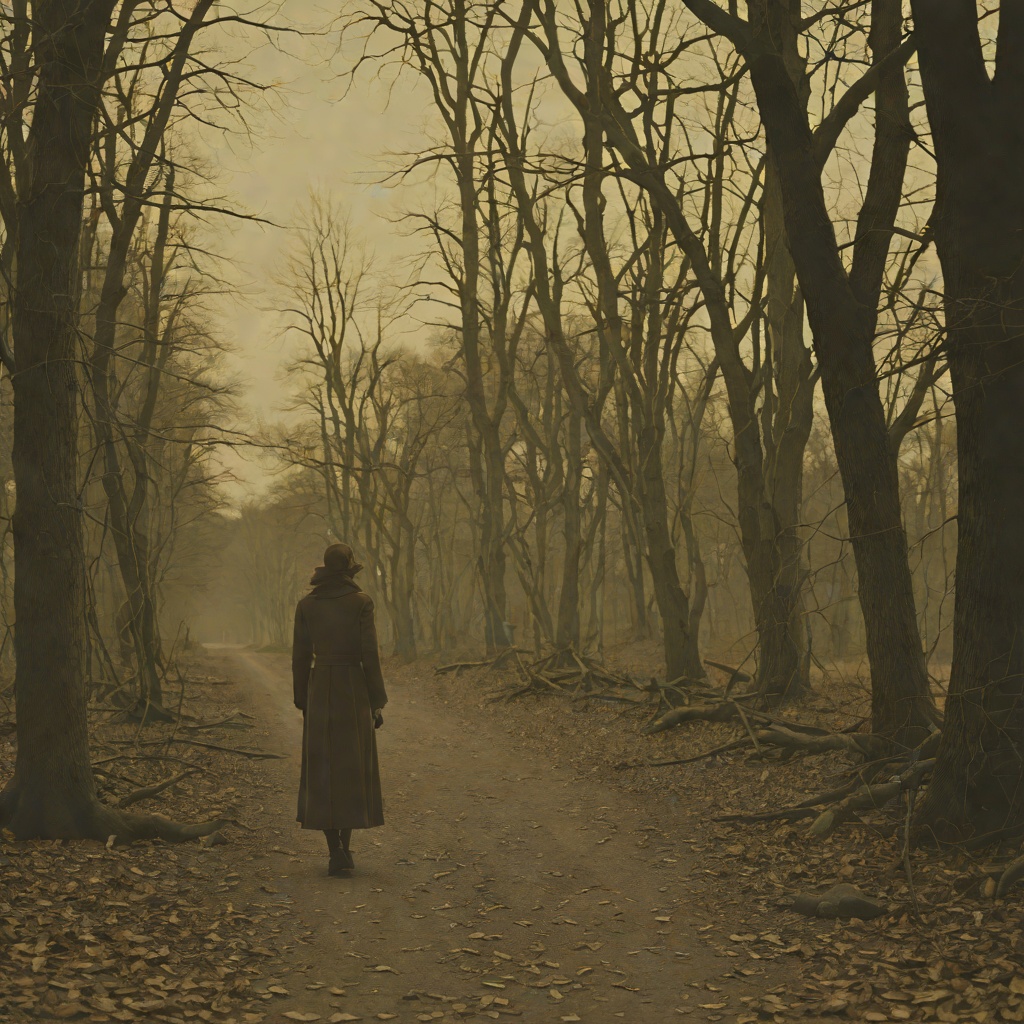
As the journey progresses, the waiting deepens into a form of faith. Walking through the open land, Harold finds that he no longer sees distance in terms of miles; he measures it with his remembering. The past he has spent twenty years seeking to avoid chatters and plays through his head with a wild energy that is its own. The waiting gives his walking a purpose that transcends the physical effort, making each step a reaffirmation of the promise. He takes the A-roads, B-roads, lanes and tracks, the compass quivering northwards as he follows. He goes by day or by night, as the mood takes him, mile after mile after mile. If the blisters are bad, he binds them with duct tape. He sleeps when the need for it comes, and then returns to his feet and walks again. It seems to Harold that he has been waiting all his life to walk. Queenie would live. He knows it.
The Waiting Confirmed and Tested
The waiting is confirmed from the hospice side when Harold phones from Nailsworth. The woman who answers gives a fluttery noise, like a laugh, and tells him they have never seen anything like it: some days Queenie sits up, and she shows them all his postcards. When Harold shakes his head, not understanding, she explains: 'She's waiting, Mr Fry. Like you said she should.' A cry of joy shoots out of him and takes him by surprise. 'She's alive? She's getting better?' He laughs, not meaning to, but it grows bigger, spilling out in waves as tears moisten his cheeks. 'She's waiting for me?' He throws open the door of the kiosk and punches the air. The woman admits she had been afraid he had misunderstood the gravity of things, but she was wrong. 'It's a rather unusual kind of healing. I don't know how you came up with it. But maybe it's what the world needs. A little less sense, and a little more faith.'
When the voice asks when they should expect him, Harold looks at his watch, wondering how quickly he could get a train and how many different connections it would take. Then he pictures the space between himself and Queenie: the hills, the roads, the people, the sky. He sees them as he had done on that first afternoon, but now there is a difference; he places the image of himself among them. He is a little broken, a little tired, his back to the world, but he would not let Queenie down. 'In about three weeks. Possibly more or indeed less.' He tells her to tell Queenie not to give up, that he will keep walking, and he is laughing again because she is.
The waiting is tested most severely near the end of the journey. At Wooler, Harold's faith collapses, and he phones Maureen in despair. She tells him, her voice shooting out so loud and fast it hurts his ear, 'Queenie is still alive, Harold. You asked for her to wait and you see, she is waiting. Rex and I checked the weather forecast and they have slapped happy sun shapes all over the United Kingdom. You'll feel better in the morning.' Harold protests, 'Maureen? I can't do it. I was wrong.' But she does not hear, or if she hears she will not allow the gravity of what he is saying. Her voice keeps coming at him, rising in pitch: 'Keep walking. It's only sixteen more miles to Berwick. You can do it, Harold. Remember to stay on the B6525.' The waiting, once his own promise, has become a shared burden that others now carry for him.
The Waiting Fulfilled
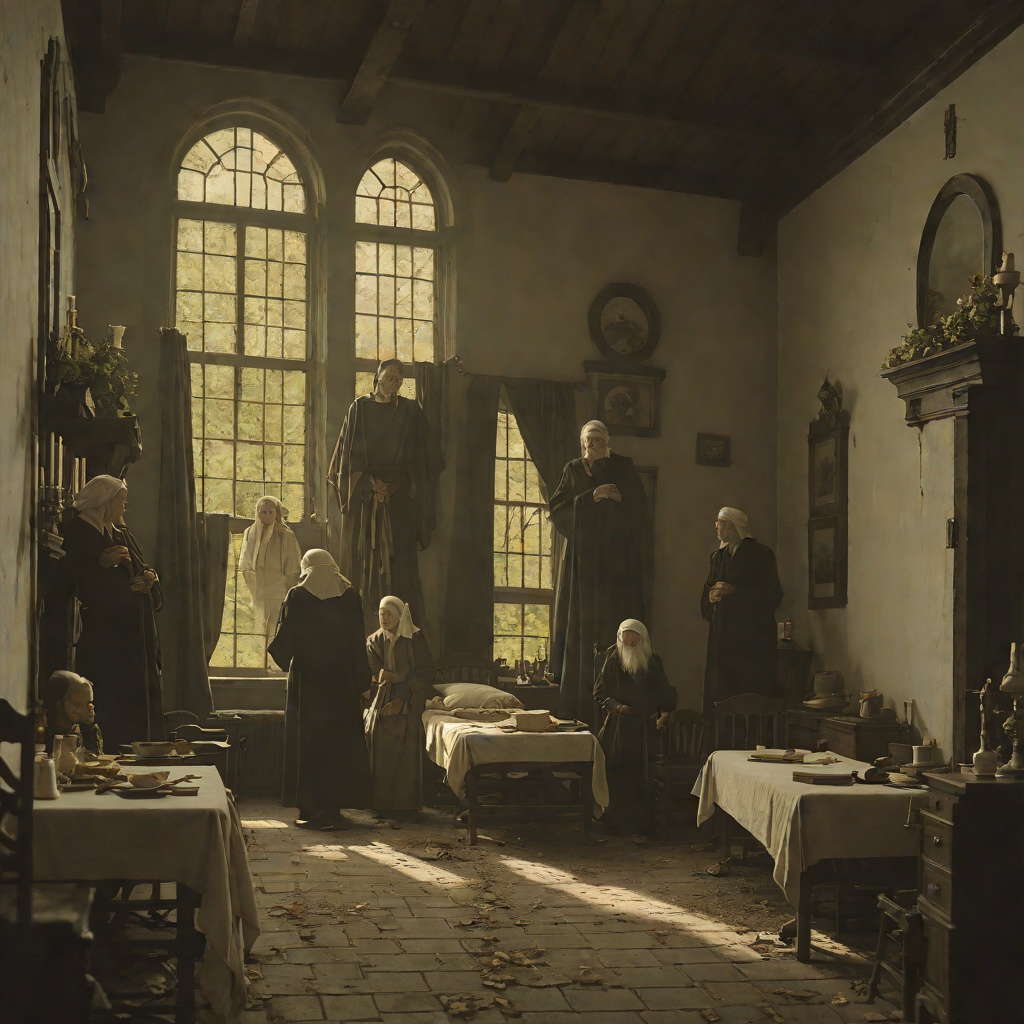
When Harold finally arrives at St Bernadine's Hospice, he is told that Queenie is not there, and feels a giddying wave of unexpected relief. Sister Philomena laughs and nods in the direction of the bed, where he finds a slight form beneath the ice-white sheets. Something stretches at its side, like a long white claw, and then he realizes it is Queenie's arm. The nun's voice comes close to his face, the skin a web of fine wrinkles: 'Harold. Queenie is confused, and in some pain. But she has waited. As you said she should.' She withdraws to let him pass.
Harold takes a few steps closer, and then a few more, with his heart throbbing. As he finally arrives at the side of the woman for whom he has travelled so many miles, his legs almost give way. She lies, not moving, only a few feet from his touch, her face towards the light at the window. He wonders if she is sleeping, or maybe drugged, or waiting for something that isn't him. It is intensely private; the way she does not move, or notice his arrival. Her body makes almost no shape against the sheets. She has the smallness of a child. The waiting has been fulfilled, but the fulfillment is not the triumph Harold imagined. Queenie has waited, as he said she should, but the waiting has brought him to a woman who is confused, in pain, and barely present. The promise that sustained his journey now reveals its cost: the waiting kept her alive, but it could not save her.
The Significance of the Waiting
The waiting transforms the novel's central relationship into a reciprocal act of faith. It is not merely that Harold walks for Queenie; it is that Queenie's waiting makes his walking meaningful, and his walking makes her waiting bearable. The covenant echoes the pilgrim's hymn that frames the book, with its resolve that no discouragement shall make the pilgrim relent from his first avowed intent to be a pilgrim. Harold's promise to Queenie becomes his own form of pilgrimage, a secular act of devotion that draws strangers into its orbit. The garage girl, Martina, Wilf, and the pilgrims who gather around him are all drawn into the force field of the waiting, each finding in it a reason to believe in something beyond themselves.
The waiting also exposes the fragility of faith. Harold knows that his faith, such as it is, is a fragile thing. The promise that sustains him is also the source of his deepest anxiety: if he stops walking, Queenie will die. This is why he refuses lifts, walking equipment, and extra packages of food, and why he insists on keeping to his yachting shoes despite the wear and tear. They are his, and the journey must be his too. The waiting demands authenticity, a fidelity to the instincts that make him Harold, as opposed to anyone else. In the end, the waiting is not about arriving but about the walking itself, the one foot in front of the other that stands to reason will get him there. Queenie's waiting gives Harold's walking its meaning, and Harold's walking gives Queenie's waiting its purpose, and together they create a small miracle that the novel refuses to explain away.